
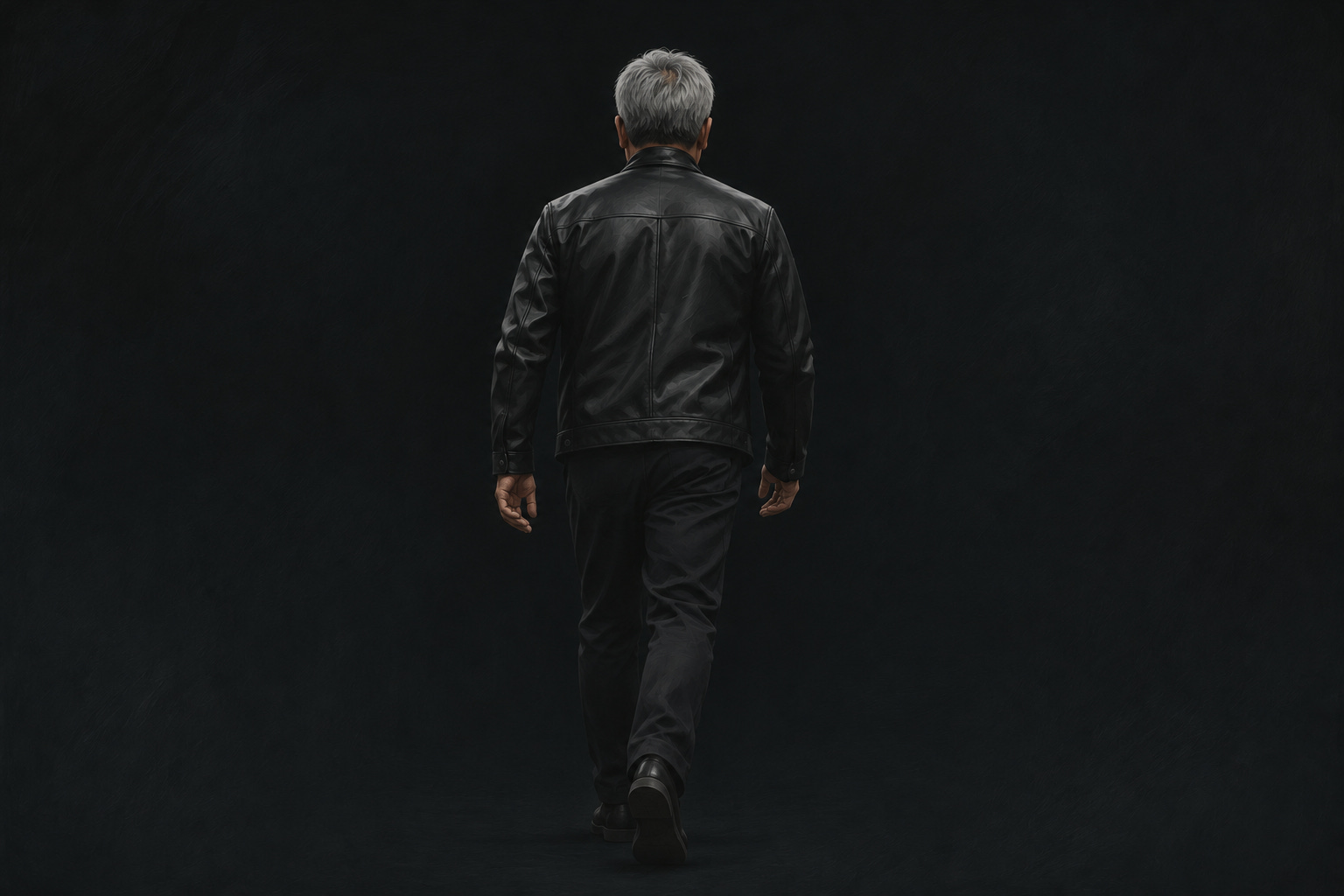
Jensen Huang has resigned.
The company is in an awkward position, having refused to put a succession policy in place. Colette Kress, the CFO, will step in until it finds a replacement.
Company scandal aside, and there has been a lot, it’ll have a big impact on the AI boom.
Nvidia has been, without doubt, the linchpin of that boom. In the five years to 2026, the firm sold nearly 14 million flagship AI chips. They account for 85% of the market. The company has provided financial guarantees to the constellation of upstart AI infrastructure companies, the so-called neoclouds, so they can get their business moving. It has been a substantial venture capital backer of AI companies, with nearly $10 billion across Europe in the last year – the biggest investor there.
The numbers don’t do justice to how important Jensen himself has been. This isn’t like Apple without Steve Jobs. When Steve Jobs relinquished the CEO role in 2011, shortly before he passed away, he left a well-briefed successor and a management team known to customers and the market alike. And if Nvidia has been the linchpin of the AI boom, Jensen has been the linchpin of Nvidia.
I thought of him as the person with the best visibility into what was going on in AI, simply because everything ran on his chips. He advocated open-source models, including, uncomfortably now, Chinese ones. And pushed for a more accommodating approach to China.
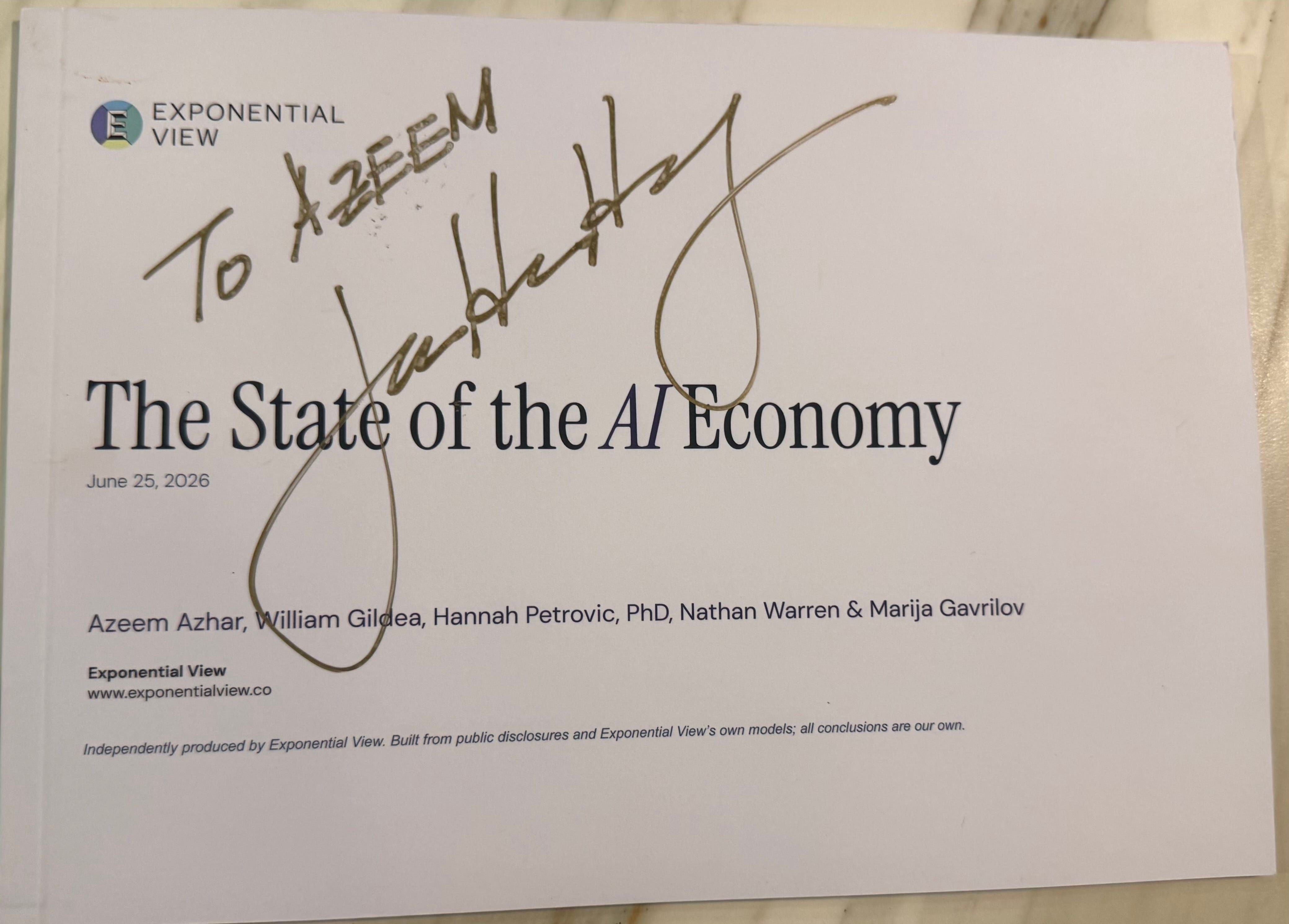
I’ve seen him in London a couple of times. Once, he arrived on stage from down the street with then-Prime Minister Keir Starmer in tow. He brings energy and hands out billions of dollars. Calling out a startup’s name, followed by “I’m backing you with $500m” or whatever the number was. He returned a printout of our State of the AI Economy report, his signature across the front in gold marker, telling me it would be worth more now. Maybe even more after today.
The linchpin seems to be made less of solid steel and more of a well-worn leather. Will the ecosystem that depends on it stay on the road?
The current wave of AI investments, in model makers and infrastructure, is predicated on massive customer demand, not rampant oversupply. The industry’s common refrain over the past two years has been consistent: we are short on capacity. Not tomorrow, but today. That is why the spot prices for AI chips stay high even as they age. It’s why Anthropic has lined up $900bn of computing supply over the next 15 to 20 years – to make sure they don’t run short.
We’ve estimated that in the last 12 months, total revenues in the AI sector (outside of China) came to $188bn, growing faster than 4.2x a year. About 75% of that ends up at the infrastructure layer: the companies that own and operate the chips that do the calculations that make ChatGPT run for you.

The vast majority of revenue comes from chips made by Nvidia.
And the lack of capacity is what has created opportunities for new infrastructure companies, the so-called neoclouds. These young pups don’t have the track record of Microsoft or Google, so they have had to lean on Nvidia, their main supplier, for various kinds of guarantees. These guarantees range from the reasonably above-board to things that smell circular. While the numbers are large, for some companies (like Anthropic or XAI), Nvidia’s contribution is not a do-or-die proportion. But the man behind it all is leaving the building.